Cyanogenmod 7 Source Download Rom Free
NOTE: FOR THOSE WHO WANTS TO HAVE A EARLY TASTE OF 'ANDROID NOUGAT 7.1', HERE IS CYANOGENMOD 14.1. I am not responsible for bricking your device.
So better watch video tutorials on how to install TWRP, CM14 and GApps. Goodluck guys. My own review: I have this ROM for almost 3 days and i have no issues to it. So I may say that this ROM is stable but this is UNOFFICIAL release by Devs so expect to have bugs.
But now it is very stable, safe to install and it is the best ROM in town. ENJOY CM14.1 GUYS! This is Android '7.1', not '7.0' - CyanogenMod is a free, community built, aftermarket firmware distribution of Android 7.1 (Nougat), which is designed to increase performance and reliability over stock Android for your device. CyanogenMod is based on the Android Open Source Project with extra contributions from many people within the Android community. It can be used without any need to have any Google application installed.
Linked below is a package that has come from another Android project that restore the Google parts. CyanogenMod does still include various hardware-specific code, which is also slowly being open-sourced anyway.
All the source code for CyanogenMod is available in the CyanogenMod Github repo. And if you would like to contribute to CyanogenMod, please visit out Gerrit Code Review. You can also view the Changelog for a full list of changes & features. Arun7129 posted on 2016/11/10 06:20 Builds: Google Apps: After you installed the TWRP recovery, that two flashable zips are the CM14.1 and GApps. First, move the two ZIP files to the SDCARD and make sure you've backup all of your files.
Backing up files through the computer is better but if you want to get back to your stock ROM, do the NANDROID BACKUP. Turn off your device. Boot to recovery. (Press and hold power button and volume down button at the same time) 3. When you are booted to the TWRP, swipe to allow modifications and press 'Wipe' then 'Advanced Wipe' Click all of it EXCEPT THE SDCARD. Then go back to the main menu of TWRP and Press 'Install' 4.
Switch storage to SdCard and click first the CM14 ROM and wait for it to finish installing. After installing CM14 zip file, clear cache/dalvik. Next to install in the GApps zip. Click it and swipe to flash it and wait for it to finish. Then clear again the cache/dalvik and you're good to go.
Languages list. Update method, ROM flashing based (optional Repositories like, or ) (if installed) Platforms, type Under multiple licenses; these can be viewed per repo on under NOTICE/LICENSE files Preceded by Official website LineageOS Android Distribution is a for and, based on the mobile platform. It is the successor to the highly popular, from which it was in December 2016 when announced it was discontinuing development and shut down the infrastructure behind the project. Since Cyanogen Inc.
Retained the rights to the Cyanogen name, the project rebranded its fork as LineageOS. LineageOS was officially launched on December 24, 2016, with the available on. Since that time LineageOS development builds now cover more than 178 phone models with over 1.7 million installs, having doubled its user base in the month February–March 2017. Main article: (often abbreviated 'CM') was a highly popular for and, based on the mobile platform.
Although only a subset of total CyanogenMod users elected to report their use of the firmware, as of 23 March 2015, some reports indicated over 50 million people running CyanogenMod on their phones. It was also frequently used as a starting point by developers of other ROMs.
In 2013, the founder, obtained under the name Cyanogen Inc. To allow commercialization of the project.
In his view, the company did not capitalize on the project's success, and in 2016 he either left, or was forced out as part of a corporate which involved a change of CEO, closure of offices and projects, and cessation of services. The code itself, being both and popular, was quickly under the new name LineageOS and community efforts began to resume development as a community project. CyanogenMod offered a number of features and options not available in the official distributed by most mobile device vendors. Features supported by CyanogenMod included native support, audio codec support, a large list, Privacy Guard (per-application management application), support for over common interfaces, CPU and other performance enhancements, root access, soft buttons and other 'tablet tweaks', toggles in the notification pull-down (such as, and ), and other interface enhancements. Many of the features from CyanogenMod would later be integrated into the official Android code base.
CyanogenMod did not contain or, according to its developers. CyanogenMod was also said to increase performance and reliability compared with official firmware releases. Development Similar to CyanogenMod, the project is developed by numerous device-specific maintainers and uses for its process.
It also retained the old versioning format (for example, Android 7.1 is LineageOS 14.1). Builds are released on a weekly basis and are signed with LineageOS' private keys. Prior to the official launch of LineageOS, many developers from had already developed unofficial versions of LineageOS from the source code. Community LineageOS allows the community to get involved with the development in various ways. Is used for the code review process of either the operating system and the infrastructure.
The, containing information regarding installation, support and development of LineageOS is also open to contributions through Gerrit. Other Lineage platforms include for managing translations, for bug tracking, a page for checking out what kernel vulnerabilities have been addressed in a specific kernel (note that this page does not always reflect the real status of the kernel because it has to be updated manually by the maintainer). There is also an official, and two, hosted on ( #lineageos and #lineageos-dev). During the month of August, in 2017, LineageOS team held a Summer Survey in which they asked users some feedback to improve the development of the operating system.
The results were later published in the month of October, and according to the team, they'll use the gathered data to improve the upcoming LineageOS 15 release. LineageOS is also known for posting a 'regularly irregular review' in their in which they expose the work done since the previous post. Version history. See also: and LineageOS main version Android version Last or major release Recommended build release date Notable changes Changelog Older version, yet still supported: 13 Android 6.0.1 (Marshmallow) Older version, yet still supported: 13.0 17- 22 January 2017 Based on CyanogenMod 13 Latest preview version of a future release: 14 Android 7.1.1/7.1.2 (Nougat) Latest preview version of a future release: 14.1 17- 22 January 2017 14.1 is considered a 'work in progress.' This was the introductory version when forked from CyanogenMod 14.1.
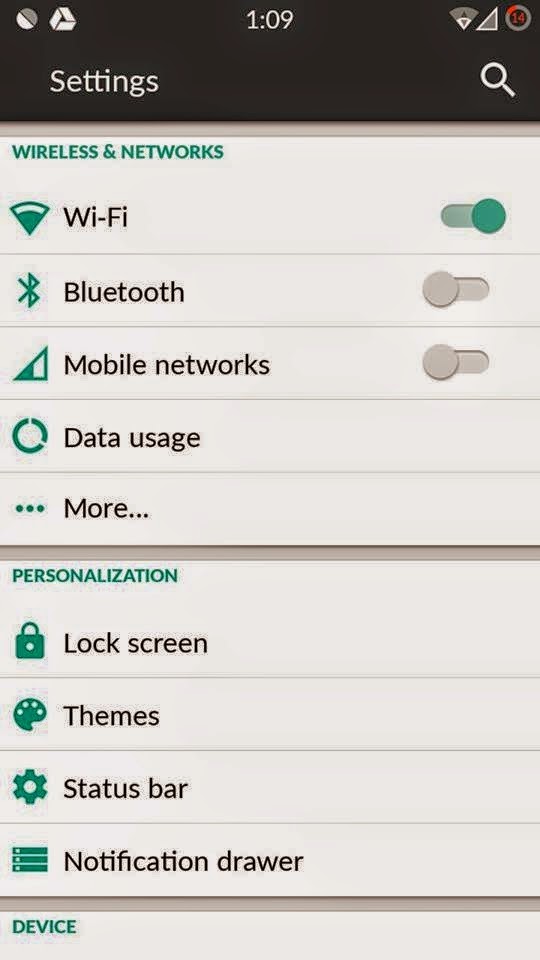
Future release: 15 Android 8.1.0 (Oreo) Future release: 15.1 17- 27 December 2017 15.1 will be the next official release skipping Android 8.0. The severe vulnerability of Android (and other) devices to the WiFi (Key Reinstallation Attack) was addressed in the Lineage ROM as of 16 October 2017. Many devices, which will not receive a patch for the manufacturers' stock ROM, can be protected against KRACK by installing a LineageOS ROM. Preinstalled Apps LineageOS includes many useful apps, but, like its predecessor CyanogenMod, is free from the bloatware often pre-installed by a phone's manufacturer or carrier. AudioFX - Audio optimizer with presets to alter the listening experience.
Browser - A lightweight browser that relies on the System Webview, for low-end devices, also known as Jelly. FlipFlap - An app for smart flip covers, only included on select devices. Calculator - which resembles a four-function calculator and offers some more advanced functions. Calendar - Calendar functionality with Day, Week Month, Year or Agenda views. Camera - Dependent on device specification will take video or photos, including panoramic.
This app is formerly known as Snap. Clock - World clock, countdown timer, stopwatch and alarms. Contacts - Phonebook for numbers and email addresses. Email - Email client that handles POP3, IMAP and Exchange. Files - Simple File Manager to move, copy and rename files on internal storage or SD card.
Gallery - Organise photos and videos into a timeline or albums for easy viewing. Messaging - SMS messaging. Music - A music player, formerly known as Eleven.
Phone - for making calls. Includes speed dial, phone number lookups and call blocking.
Recorder - A screen and/or sound recorder. Trebuchet - A customizable launcher that supports protected apps.
Although they are not included by default due to legal issues, users can flash the normal Google apps, including the Google Play Store and Play Apps with a gapps zip package. Unique features LineageOS offers several unique features that doesn't include. Some of these features are:. Custom Button placement - Set custom location for buttons on the navigation bar, or enable on-screen buttons for devices with hardware buttons. System Profiles - Enable or disable common settings based on the selected profile (For example, a 'Home' profile and a 'Work' profile).
The profile can be selected either manually or through the use of a 'trigger,' such as upon connecting to a specific WiFi access point, connecting to a bluetooth device or tapping an NFC tag. Custom Quick-Setting tiles - Quick Setting Tiles like 'Caffeine' preventing the device from sleeping, enabling/disabling Heads Up notifications, 'Ambient Display' and 'ADB over network' (to name a few) are present to easily toggle common settings. Expanded Desktop - Force 'Immersive Mode' in apps that don't enable it initially.
LiveDisplay - Adjust color temperature for the time of day. Privacy Guard - Easily manage how apps can manage your data. Protected Apps - Hide specific apps behind a secure lock. This works hand-in-hand with Trebuchet; the respective app's icon is removed from the launcher, and 'Secure Folders' can be created to easily access these applications. A pattern is used to lock these apps.
PIN Scramble - For users securing their device with a pin, the layout can be scrambled each time the device locks to make it difficult for people to figure out your lock. Custom Pattern Sizes - In addition to Android's 3x3 pattern size, a 4x4, 5x5 or 6x6 size can be used. Lock screen customization - The lock screen allows all sorts of customizations, including media cover art, a music visualizer, displaying the weather (if a weather provider is installed), and double-tap to sleep.
Weather providers - Display the weather in widgets or on the lock screen with a weather provider. This functionality is not included by default; a weather provider must be downloaded from the LineageOS Downloads website. Supported devices As of 6 December 2017, LineageOS officially supports 184 devices, including and -released devices. Official builds on the current development branch are labeled as 'nightly,' although they are generally released once per week with builds for various devices staggered throughout the week to ease the load on the automated build infrastructure. For the first two months of the project, they also produced parallel experimental builds to allow in-place upgrades from previous CyanogenMod installations and ease migration to LineageOS.
Forks A dispute in the community as to whether LineageOS should officially support signature spoofing resulted in the forking of LineageOS for microG. The project ships custom builds of LineageOS with the required patch and native support, bundled with the MicroG project's re-implementation of proprietary.
In other respects it follows upstream, shipping OTA updates every three days. It supports all devices officially supported by LineageOS. See also. Heater, Brian (24 December 2016). Retrieved 26 December 2016. 24 December 2016.
Archived from on 25 December 2016. Retrieved 26 December 2016. Levy, Nat (26 December 2016). Retrieved 26 December 2016. Gallagher, Sean Gallagher (27 December 2016).
Ars Technica. Ars Technica. Retrieved 2017-05-26. Retrieved 2017-10-16. 20 March 2017. Retrieved 4 January 2018.
^ Helft, Miguel. Retrieved 16 April 2015. Soyars, Chris (21 March 2011). Archived from on 4 June 2016. Retrieved 27 October 2011.
CyanogenMod @CyanogenMod (12 January 2012). Retrieved 26 December 2016 – via Twitter. Archived from on 25 December 2016. Retrieved 25 December 2016. Reed, Brad (18 September 2013). Retrieved 26 December 2016.
Tal, Lior (30 November 2016). Cyanogen Inc.
Archived from on 27 December 2016. Retrieved 24 January 2017. Ruddock, David (28 November 2016). Android Police. Retrieved 24 January 2017.
Kondik was removed from the company's board, allegedly. CyanogenMod @CyanogenMod (25 December 2016). Retrieved 26 December 2016 – via. 19 February 2011. Archived from on 21 October 2016. Retrieved 30 September 2013.
5 December 2011. Archived from on 19 April 2016. Archived from on 5 February 2013.
Retrieved 27 January 2013. Archived from on 22 December 2016. Retrieved 27 January 2013. OS, Lineage. Retrieved 2017-01-21.
LineageOS. Retrieved 2017-10-25. LineageOS. Retrieved 2017-10-25. LineageOS.
Retrieved 2017-10-25. Retrieved 4 January 2018. 16 October 2017. Retrieved 2 November 2017.
@LineageOS (16 October 2017). Retrieved 16 October 2017.
Siddharth Chauhan (7 February 2017). Retrieved 20 October 2017. As far as user interface goes, Lineage OS presents a clean and bloatware free stock Vanilla Android experience but still has some tricks up its sleeve. Retrieved 2017-10-25. 6 December 2017. Retrieved 6 December 2017.
8 March 2017. Retrieved 9 March 2017. Archived from on 26 January 2017.
Cyanogenmod 7 Source Download Rom Free Software
Retrieved 24 January 2017. 20 January 2017. Retrieved 24 January 2017. Rigg, Jamie (24 January 2017). Retrieved 24 January 2017. online, heise. Heise online.
26 November 2017. External links.