Stonewall Attack Chess Pdf Torrent
ECO index: A00-A99 A00: Uncommon Openings: 1., 1., 1., 1., 1., 1., 1., 1., 1., 1., 1., 1., 1., 1. A01: Nimzowitsch-Larsen Attack: 1.
A02: Bird's Opening: 1. A03: Bird's Opening: 1. A04: Reti Opening: 1. A05: Reti Opening: 1.
A06: Reti Opening: 1. A07: King's Indian Attack: 1. A08: King's Indian Attack: 1.
A09: Reti Opening: 1. A10: English: 1. A11: English, Anglo-Slav System: 1. A12: English with b3: 1.
A13: English: 1. A14: English: 1. A15: English: 1. A16: English: 1. A17: English: 1. A18: English, Mikenas-Carls: 1.
A19: English, Mikenas-Carls, Sicilian Variation: 1. A20: English: 1.
Stonewall Attack Chess
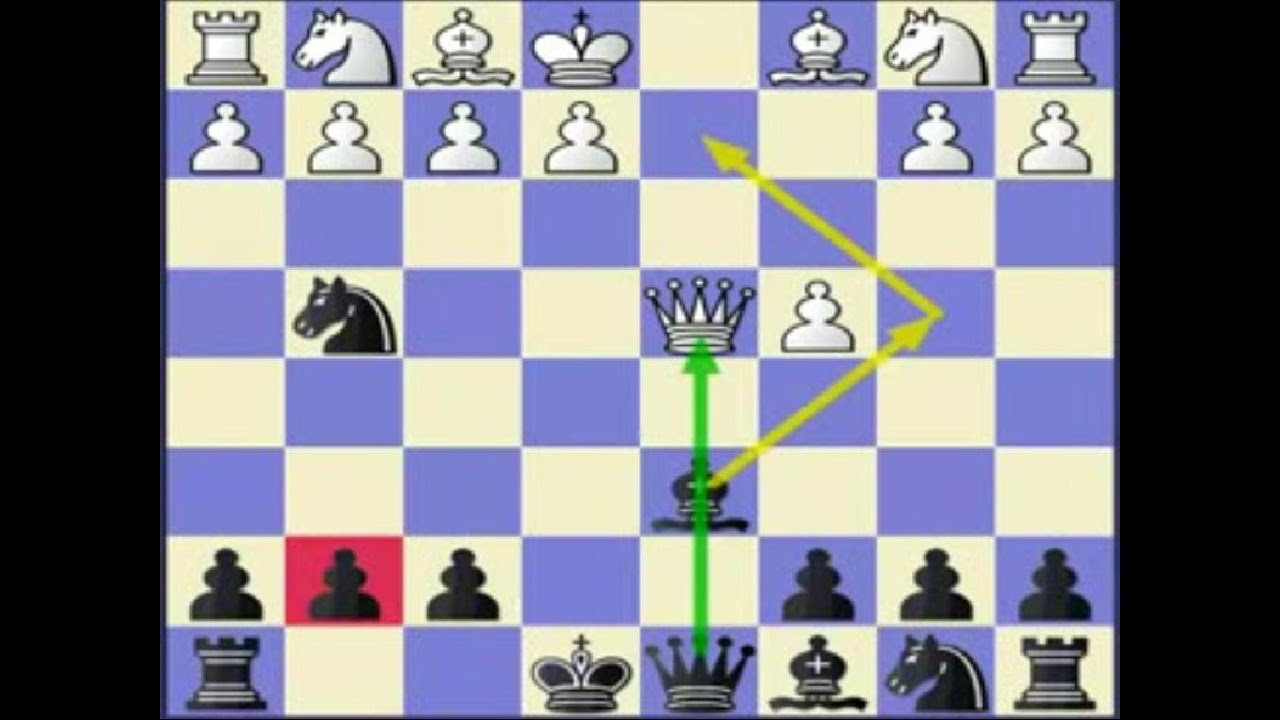
A21: English: 1. A22: English: 1. A23: English, Bremen System, Keres Variation: 1. A24: English, Bremen System with.g6: 1. A25: English: 1. A26: English: 1.
Stonewall Attack Chess Pdf Torrent 2016
A27: English, Three Knights System: 1. A28: English: 1. A29: English, Four Knights, Kingside Fianchetto: 1. A30: English, Symmetrical: 1. A31: English, Symmetrical, Benoni Formation: 1. A32: English, Symmetrical Variation: 1.

A33: English, Symmetrical: 1. A34: English, Symmetrical: 1. A35: English, Symmetrical: 1.
A36: English, Symmetrical: 1. A37: English, Symmetrical: 1. A38: English, Symmetrical: 1.
A39: English, Symmetrical: 1. A40: Unusual Black responses to 1. (Englund Gambit), 1. (Polish Defence), 1. (Nimzowitsch Defence), 1. (Modern Defence without 2. (French Indian Defence).
A41: Tartakower System: 1. A42: Tartakower System with 2. A43: Various Benonis: 1. A44: Old Benoni: 1. A44: Semi-Benoni: 1.
A45: Unusual Indian Openings: 1. A45: Trompowsky Attack: 1. A46: Unusual Indian Openings with 2. A47: Unusual Indian Openings with 2. A48: Torre Attack with 2.e6: 1. A48: Torre Attack with 2.g6: 1.
A48: London System: 1. A49: Fianchetto Variation: 1. A50: Black Knights' Tango: 1. A51: Budapest Gambit Declined and Unusual Lines: 1. A52: Budapest Gambit Main Lines: 1. A53: Old Indian Defence: 1. A54: Old Indian Defence main lines: 1.
A55: Old Indian Defence main lines: 1. A56: Czech Benoni: 1.
A57: Benko/Volga Gambit sidelines: 1. A58: Benko/Volga Gambit Accepted: 1.
A59: Benko/Volga Gambit Accepted (White castles by hand): 1. A60: Modern Benoni and early divergences: 1. A61: Modern Benoni without early e4: 1. A62: Modern Benoni, Fianchetto Variation without early.Nbd7: 1.
A63: Modern Benoni, Fianchetto Variation sidelines: 1. A64: Modern Benoni, Fianchetto Variation main line: 1. A65: Modern Benoni, sidelines with early e4: 1. A66: Modern Benoni, Mikenas Attack: 1. A67: Modern Benoni, Taimanov Variation: 1. A68: Modern Benoni, Four Pawns Attack without 9.Re8: 1. A69: Modern Benoni, Four Pawns Attack with 9.Re8: 1.
A70: Modern Benoni, 7.Nf3: 1. A71: Modern Benoni, 7.Nf3 Bg7 8.Bg5 without Be2: 1.
A72: Modern Benoni, Classical Variation with Bg5: 1. A73: Modern Benoni, Classical Variation and unusual Black 9th moves: 1. A74: Modern Benoni, Classical Variation with 9.a6: 1.
A75: Modern Benoni, Classical Variation main line: 1. A76: Modern Benoni, Classical Variation with 9.Re8 10.Qc2: 1. A77: Modern Benoni, Classical Variation with 9.Re8 10.Nd2: 1.
A78: Modern Benoni, Classical Variation with 10.Na6: 1. A79: Modern Benoni, Classical Variation with 10.Na6 11.f3: 1. A80: Dutch Defence and unusual White second moves: 1. A81: Dutch Defence with 2.g3: 1. A82: Dutch Defence, Staunton Gambit: 1.
A83: Dutch Defence, Staunton Gambit with 3.Nc3 Nf6 4.Bg5: 1. A84: Dutch Defence, 2.c4: 1. A85: Dutch Defence, 2.c4 Nf6 3.Nc3: 1.
A86: Dutch Defence, Leningrad Variation sidelines: 1. A87: Dutch Defence, Leningrad Variation with 5.Nf3: 1.
A88: Dutch Defence, Leningrad Variation main line 7.c6: 1. A89: Dutch Defence, Leningrad Variation main line 7.Nc6: 1. A90: Dutch Defence sidelines and Stonewall: 1. A91: Dutch Defence, Classical Variation sidelines: 1.
A92: Dutch Defence, Classical Stonewall with.Be7 and early deviations: 1. A93: Dutch Defence, Classical Stonewall with 7.b3: 1. A94: Dutch Defence, Classical Stonewall with 7.b3 c6 8.Ba3: 1. A95: Dutch Defence, Classical Stonewall with 7.Nc3 c6: 1. A96: Dutch Defence, Ilyin-Genevsky Variation: 1.
A97: Dutch Defence, Ilyin-Genevsky Variation: 1. A98: Dutch Defence, Ilyin-Genevsky Variation with 8.Qc2: 1. A99: Dutch Defence, Ilyin-Genevsky Variation with 8.b3: 1. ECO volumes External Links from chessarch.com.
General observations Weaknesses in the pawn structure, such as, or pawns and, once created, are usually permanent. Care must therefore be taken to avoid them (but there are exceptions — for instance see Boleslavsky hole below). In the absence of these structural weaknesses, it is not possible to classify a pawn formation as good or bad — much depends on the positions of the pieces. However, the pawn formation does determine the overall strategies of the players to a large extent, even if arising from unrelated openings. Pawn formations symmetrical about a vertical line (such as the e5 Chain and the d5 Chain) may appear similar, but they tend to have entirely different characteristics because of the propensity of the kings to on the.
Pawn structures often transpose into one another, such as the Isolani into the Hanging Pawns and vice versa. Such transpositions must be considered carefully and often mark shifts in game strategy.
The major pawn formations In his 1995 book, classified the major pawn formations into 17 categories, discussed below. In 2015, the book Chess Structures, by further studied the subject, subdividing pawn structures into the 28 most important. It is to be noted that for a formation to fall into a particular category, it need not have a pawn position identical to the corresponding diagram, but only close enough that the character of the game and the major themes are unchanged. It is typically the center pawns whose position influences the nature of the game the most.
Structures with mutually attacking pawns are said to have tension. They are ordinarily unstable and tend to transpose into a stable formation with a pawn push or exchange. Play often revolves around making the transposition happen under favorable circumstances.
For instance, in the Declined, Black waits until White develops the king's bishop to make the d5xc4 capture, transposing to the Slav formation (see below). Caro formation. The Scheveningen formation Openings: Primary: (, Richter-Rauzer and Sozin variations), and several other Sicilian variations. Character: Complex, dynamic, sharp. Themes for White: Pressure on the d file, space advantage, e4-e5 break (often prepared with f2-f4), f2-f4-f5 push, g2-g4-g5 blitz (see ). Themes for Black: Pressure on the c file, minority attack (and counterplay in general) on the queenside, pressure on White's pawn on e4 or e5, d6-d5 break, e6-e5 transposing into the (see below).
It is often unwise for White to exchange a piece on c6 allowing the recapture bxc6, because the phalanx of Black's center pawns becomes very strong. The Dragon formation Openings: Primary:. Other: (with colours reversed). Character: Either a razor sharp middlegame with opposite side castling or a moderately sharp game with same side castling. The Sicilian Dragon requires a high level of opening memorization to play properly. This is especially true when it comes to the Yugoslav Attack in which White plays the moves Be3, f3, Qd2 and 0-0-0.
Other variations are: The Classical Dragon where White plays Be2 and 0-0; The Tal attack is defined by Bc4 and 0-0, and the Fianchetto Defense where White plays g3, Bg2 and 0-0. These less common variations lead to less tactical positions, with a potentially technical endgame. Themes for White: Outpost on d5, kingside attack (either f2-f4-f5 with kingside castling or h2-h4-h5 with queenside castling), weakness of Black's queenside minority (of pawns) in the endgame. Themes for Black: Pressure on the long diagonal, queenside counterplay, exploiting White's often overextended kingside pawns in the. The Boleslavsky hole formation Openings: Primary:, Classical, Sveshnikov, Kalashnikov. Other: Sicilian O'Kelly (2.
Character: Open, dynamic game. Themes for White: taking control the d5, exploiting the d6 pawn, f2-f4 break. Themes for Black: d6-d5 break, queenside minority attack, the c4 square. It is a paradoxical idea that Black can strive for equality by voluntarily creating a hole on d5. The entire game revolves around control of the d5 square.
Black must play very carefully or White will place a knight on d5 and obtain a commanding positional advantage. Black almost always equalizes, and might even obtain a slight edge, if the d6-d5 break can be made. Black has two options for his queen bishop: on e6 and on b7 (after a7-a6 and b7-b5). Unusually for an open formation, bishops become inferior to knights because of the overarching importance of d5: White will often exchange Bg5xf6, and Black usually prefers to give up his queen bishop rather than a knight in exchange for a white knight if it gets to d5. When white queenside, Black often delays castling because his king is quite safe in the center. The d5 chain formation Openings: Primary:. Other –, (Spanish).

Character: Closed game with opposite side activity. Themes for White: Massive queenside space advantage, c2-c4-c5 break (optionally prepared with b2-b4), with g2-g4 (after f2-f3), f2-f4 break. Themes for Black: kingside attack, f7-f5 break, g7-g5-g4 break (after f2-f3), c7-c6 break, prophylaxis with c6-c5 or c7-c5 transposing to a Full Benoni formation. The chain arises from a variety of openings but most commonly in the heavily analyzed King's Indian Classical variation. The theme is a race for a breakthrough on opposite flanks – Black must try to whip up a kingside attack before White's heavy pieces penetrate with devastating effect on the c-file. The position was thought to strongly favour White until a seminal game (- 1953) where Black introduced the maneuver Rf8-f7, Bg7-f8, Rf7-g7. When the chain arises in the Ruy Lopez, play is much slower with tempo being of little value and featuring piece maneuvering by both sides, Black focusing on the c7-c6 break and White often trying to play on the kingside with the f2-f4 break.
The e5 chain formation Openings: Primary:. Character: Closed/semi-open but sharp game. Themes for White: kingside mating attack, f2-f4-f5 break. Themes for Black: Exchanging the hemmed-in QB, c7-c5 and f7-f6 breaks.
Due to White's kingside space advantage and development advantage, Black must generate counterplay or be mated. Novices often lose to the sparkling. Attacking the head of the pawn chain with f7-f6 is seen as frequently as attacking its base, because it is harder for white to defend the head of the chain than in the d5 chain. In response to exf6, Black accepts a backward e6 pawn in exchange for freeing his position (the b8-h2 diagonal and the semi-open f-file) and the possibility of a further e6-e5 break. If White exchanges with d4xc5 it is called the Wedge formation. White gets an outpost on d4 and the possibility of exploiting the dark squares while Black gets an overextended e5 pawn to work on.
The Rauzer formation (colors reversed) Openings: Primary:, (colors reversed),. Other: Ruy Lopez (colors reversed). The notation in the rest of this section refers to the colors reversed version. Character: Semi-open game. Themes for White: d6 weakness, c4-c5 push, a3-f8 diagonal, queenside pawn storm.
Themes for Black: d4 weakness, a1-h8 diagonal, f4 square, kingside attack, trading pieces for a superior endgame. The Rauzer formation is named after Rauzer who introduced it in the Ruy Lopez.
It can also rarely occur in the Ruy Lopez with colors reversed. Tarrasch – Euwe, Pistyan 1922 It is considered to give Black excellent chances because d6 is much less of a hole than White's d4. If the black king's bishop is fianchettoed it is common to see it undeveloped to f8 to control the vital c5 and d6 squares, or remove White's dark-squared bishop, the guardian of the hole. The Rauzer formation is often misjudged by beginners.
In the position on the left, White appears to have a development lead while Black's position appears to be riddled with holes. In reality, it is Black who stands clearly better, because White has no real way to improve his position while Black can improve by exploiting the d4 square. The Boleslavsky Wall formation Openings: Primary:.
Character: Semi-open game, slow buildup. Occurs after exchange of pawns on d4. Name given by Hans Kmoch. Themes for White: exploitation of d6 weakness, e4-e5 and c4-c5 breaks, minority attack with b2-b4-b5. Themes for Black: attacking the e4 and c4 pawns, d6-d5 and f7-f5 breaks, queenside play with a7-a5-a4. The wall is yet another structure that leaves Black with a d-pawn weakness, but prevents White from taking control of the center and gives Black active piece play and an opportunity to play on either side of the board.
The Hanging Pawns formation Openings: Primary: Declined. Character: Open game. Themes for White: Line opening advance in the center, kingside attack. Themes for Black: Forcing a pawn advance and blockading the pair, conversion to isolani.
Like the isolani, the are a structural weakness and must not be entered into unless the piece position offers some compensation. The play revolves around Black trying to force one of the pawns to advance. If Black can establish a permanent blockade the game is positionally won. On the other hand, White aims to keep the pawns hanging, trying to generate a kingside attack leveraging off of their superior center control. Other themes for White include tactical possibilities and line opening breaks in the center.
The Stonewall formation Openings: Primary:. Character: Closed game, uncomplicated strategy. Themes: Exchanging the bad bishop, e4/e5 outposts, breaks on the c and g files. Players must carefully consider how to recapture on the e4/e5 square, since it alters the symmetric pawn formation and creates strategic subtleties. This structure also appears in one of Botvinnik's treatments of the English. Adding the typical White fianchetto of the king's bishop to this structure provides significant pressure along the long diagonal, and usually prepares the f2-f4-f5 break.